
Brave New World: A Commentary

“Actual happiness always looks pretty squalid in comparison with the overcompensations for misery. And, of course, stability isn't nearly so spectacular as instability. And being contented has none of the glamour of a good fight against misfortune, none of the picturesqueness of a struggle with temptation, or a fatal overthrow by passion or doubt. Happiness is never grand.”
― Aldous Huxley, Brave New World
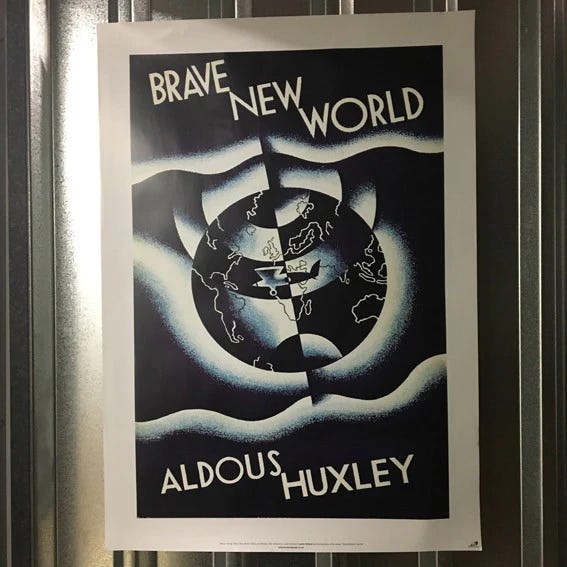
Aldous Huxley’s Brave New World is a seminal work of dystopian fiction that explores the implications of technological advancement, societal control, and the loss of individuality. Published in 1932, the novel presents a chilling vision of a future world where human beings are conditioned to conform to a rigidly controlled, hedonistic society. Through its provocative narrative and incisive commentary, Huxley examines the cost of utopia and raises profound questions about freedom, happiness, and the human spirit. This commentary delves into the themes, characters, and enduring relevance of Brave New World, while also reflecting on its literary style and philosophical insights.
The World State: A Technological Dystopia
The society depicted in Brave New World is governed by the World State, a global authority that prioritizes stability and efficiency above all else. Through the use of advanced technology and scientific methods, the World State has eliminated war, poverty, and disease. However, this apparent utopia comes at the expense of individuality, creativity, and genuine human connection.
“I want to know what passion is. I want to feel something strongly.”
Central to the World State’s control is the practice of genetic engineering and social conditioning. Humans are created in Hatcheries, where embryos are artificially fertilized, incubated, and manipulated to fit predetermined roles within society. The rigid caste system, ranging from the highly intelligent Alphas to the menial Epsilons, ensures that everyone fulfills their designated function without question. This systematic dehumanization is reinforced through conditioning techniques, such as hypnopaedia (sleep-teaching), which instill societal values from a young age.
“One believes things because one has been conditioned to believe them.”
Huxley’s portrayal of the World State raises critical questions about the relationship between technology and human freedom. While technological progress has eradicated many of the world’s traditional ills, it has also enabled unprecedented levels of control and manipulation. The novel serves as a cautionary tale, warning against the uncritical embrace of technology and the potential loss of humanity in the pursuit of efficiency and stability.
The Illusion of Happiness
One of the central themes of Brave New World is the concept of happiness and its relationship to freedom and individuality. The citizens of the World State are conditioned to believe that they are happy, and their lives are filled with distractions designed to prevent dissatisfaction. Soma, a state-sanctioned drug, plays a crucial role in maintaining this illusion. By providing an easy escape from negative emotions, soma ensures that people remain docile and content, even in the face of personal or societal challenges.
However, Huxley’s depiction of happiness is deeply ironic. The superficial pleasures offered by the World State—promiscuity, consumerism, and soma-induced euphoria—fail to provide genuine fulfillment. Instead, they serve as mechanisms of control, preventing individuals from experiencing true emotions or questioning the status quo. Huxley challenges readers to consider the nature of happiness and whether it is worth sacrificing freedom and individuality to achieve a superficial sense of contentment.
The novel’s critique of hedonism and instant gratification remains strikingly relevant in today’s world, where technological advancements and consumer culture often prioritize convenience and pleasure over deeper, more meaningful experiences. Brave New World invites readers to reflect on the consequences of a society that values comfort above all else.
The Loss of Individuality
In the World State, individuality is regarded as a threat to social stability. From birth, individuals are conditioned to conform to their predetermined roles and to suppress any desires or thoughts that deviate from societal norms. This suppression of individuality is exemplified by the uniformity of behavior and attitudes among the citizens of the World State. Creativity, critical thinking, and personal ambition are discouraged, as they have the potential to disrupt the carefully maintained equilibrium.
The loss of individuality is symbolized by the erasure of personal relationships and the commodification of human connections. In the World State, traditional family structures have been abolished, and emotional bonds are viewed as obsolete. Instead, relationships are reduced to casual encounters devoid of deeper meaning. This dehumanization underscores the novel’s critique of a society that prioritizes collective stability over personal freedom.
Huxley’s exploration of individuality is embodied by the character of Bernard Marx, an Alpha who feels alienated from the conformity of the World State. Bernard’s dissatisfaction with societal norms highlights the inherent tension between individual desires and societal expectations. However, his struggle for individuality is ultimately undermined by his own flaws and insecurities, illustrating the difficulty of resisting a system that is designed to suppress dissent.
The Role of Art and Culture
In Brave New World, art and culture are stripped of their transformative power and reduced to tools of entertainment and distraction. Shakespeare, whose works represent the pinnacle of human creativity and emotional depth, is banned in the World State, as his themes of love, tragedy, and individuality are incompatible with the society’s values. Instead, citizens are offered mindless entertainment, such as feelies—movies that stimulate the senses without engaging the intellect.
The suppression of art and culture reflects the World State’s fear of anything that might provoke critical thought or emotional depth. By eliminating access to meaningful art, the World State ensures that citizens remain complacent and unreflective. Huxley’s critique of the commercialization of culture is particularly prescient, as it anticipates the rise of mass media and its potential to dilute artistic expression in favor of profit-driven entertainment.
“A really efficient totalitarian state would be one in which the all-powerful executive of political bosses and their army of managers control a population of slaves who do not have to be coerced, because they love their servitude.”
The novel’s exploration of art and culture is most vividly expressed through the character of John, the “Savage,” who represents an alternative perspective on life and values. John’s love for Shakespeare and his rejection of the World State’s superficial pleasures highlight the enduring power of art to inspire and challenge the human spirit. His tragic struggle to reconcile his ideals with the realities of the World State underscores the importance of preserving cultural and artistic heritage in the face of societal homogenization.
The Characters: Symbols of Conflict and Contradiction
The characters in Brave New World serve as symbols of the novel’s central conflicts and themes. Bernard Marx, Helmholtz Watson, Lenina Crowne, and John the Savage each embody different aspects of the human experience and provide contrasting perspectives on the World State.
Bernard Marx: As an Alpha who feels out of place in the World State, Bernard represents the tension between individuality and conformity. His initial dissatisfaction with societal norms suggests a potential for rebellion, but his ultimate capitulation to the allure of status and acceptance highlights the difficulty of resisting societal pressures.
Helmholtz Watson: Unlike Bernard, Helmholtz embraces his individuality and seeks a deeper purpose beyond the superficial pleasures of the World State. His desire to create meaningful art and express his true self underscores the importance of intellectual freedom and creativity.
Lenina Crowne: Lenina embodies the values of the World State, particularly its emphasis on hedonism and conformity. Her interactions with Bernard and John reveal her inability to comprehend their rejection of societal norms, highlighting the pervasive influence of conditioning.
John the Savage: As an outsider who has been exposed to both the “primitive” values of the Savage Reservation and the technologically advanced society of the World State, John serves as a foil to the other characters. His love for Shakespeare and his longing for authenticity make him a powerful symbol of the human spirit, but his inability to reconcile these values with the reality of the World State leads to his tragic downfall.
Through these characters, Huxley explores the complexities of human nature and the challenges of navigating a world that seeks to suppress individuality and critical thought.
Nearly a century after its publication, Brave New World remains a profoundly relevant work. Its exploration of themes such as technological control, the commodification of culture, and the loss of individuality resonates strongly in the modern era. Advances in genetic engineering, artificial intelligence, and social media have brought many of Huxley’s predictions closer to reality, prompting readers to consider the ethical implications of these developments.
The novel’s critique of consumer culture and instant gratification is particularly pertinent in today’s society, where the pursuit of material comfort often takes precedence over deeper, more meaningful pursuits. Brave New World challenges readers to reflect on the cost of prioritizing convenience and pleasure over freedom and individuality.
Moreover, the book’s exploration of societal control through propaganda, conditioning, and distraction remains relevant in an age where misinformation and mass media play a significant role in shaping public opinion. Huxley’s vision of a society that suppresses dissent and critical thought serves as a powerful reminder of the importance of intellectual freedom and self-awareness.
Literary Style and Legacy
Huxley’s prose in Brave New World is characterized by its clarity and precision, effectively conveying the novel’s complex ideas and themes. His use of satire and irony underscores the absurdity of the World State’s values, while his vivid descriptions of the society’s technological advancements create a compelling and immersive world.
The novel’s influence on literature and popular culture is immense, inspiring countless works of dystopian fiction and sparking debates about the ethical implications of scientific and technological progress. Alongside George Orwell’s 1984, Brave New World is considered one of the defining texts of 20th-century.