
Animal Farm: A Commentary

“All animals are equal, but some animals are more equal than others.”
― George Orwell, Animal Farm.
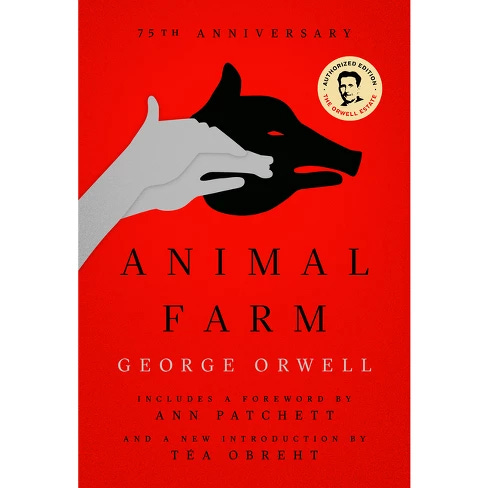
George Orwell’s Animal Farm, published in 1945, is a deceptively simple yet profoundly deep allegorical novella. On the surface, it is a tale of a group of farm animals who revolt against their human owner to establish a society of equality and freedom. However, the story quickly reveals itself as a cautionary tale about power, corruption, and the cyclical nature of oppression. Orwell uses the animals' rebellion as an allegory for the Russian Revolution and the subsequent rise of totalitarian regimes, particularly Stalinism.
This commentary delves into the themes, characters, and philosophical implications of Animal Farm, exploring its relevance to the modern world and the universal lessons it imparts about human nature and governance.
At its heart, Animal Farm is a critique of totalitarianism disguised as a fable. Orwell employs animals and their rebellion to reflect the dynamics of the Russian Revolution of 1917 and the transformation of Soviet Russia under Joseph Stalin. The farm represents a microcosm of society, where idealistic visions of equality are corrupted by the pursuit of power.
The story begins with the animals' revolt against Mr. Jones, the negligent and abusive farmer, symbolizing the overthrow of the Russian monarchy. Under the leadership of pigs, particularly Snowball and Napoleon, the animals establish a new governance structure based on the principle that "All animals are equal." However, the seeds of corruption are sown early as the pigs assume leadership roles, positioning themselves as the intelligentsia.
Orwell’s allegory underscores the idea that revolutions often fail to deliver true equality, as power concentrates in the hands of a few. This is captured poignantly in the eventual revision of the farm’s commandments to read:
"All animals are equal, but some animals are more equal than others."
Orwell's characters are richly symbolic, each representing key figures or classes in the Russian Revolution and its aftermath.
2.1. Old Major
Old Major, the wise boar who inspires the revolution, is a composite figure of Karl Marx and Vladimir Lenin. His speech, urging the animals to overthrow human oppression, lays the ideological groundwork for the rebellion. His ideals are encapsulated in the song "Beasts of England," a rousing anthem of freedom and solidarity.
Yet, Old Major’s vision is inherently flawed, as it assumes that all animals (or people) will act in good faith. His failure to anticipate the corruption of his ideals mirrors the utopian optimism of early communist theorists.
2.2. Napoleon and Snowball
Napoleon and Snowball represent Joseph Stalin and Leon Trotsky, respectively. Snowball is an idealist and a visionary, advocating for advancements like the windmill, which symbolizes industrial progress. His exile by Napoleon mirrors Trotsky’s expulsion from the Soviet Union.
Napoleon, on the other hand, is a cunning and ruthless dictator. His consolidation of power through fear and propaganda reflects Stalin’s rise to totalitarian rule. Napoleon’s use of the dogs as enforcers mirrors Stalin’s secret police, while his manipulation of the sheep to drown dissent reflects the use of mass propaganda to suppress opposition.
2.3. Boxer and Clover
Boxer, the hardworking cart-horse, embodies the proletariat—the working class that fuels the revolution with its labor but suffers under successive regimes. His tragic mantra, "I will work harder" and later, "Napoleon is always right," reflects the blind loyalty that enables authoritarianism to thrive.
Clover, another horse, represents the maternal, nurturing aspect of the proletariat. Her quiet disillusionment with the pigs’ betrayal of the revolution mirrors the despair of those who recognize but feel powerless to challenge systemic corruption.
2.4. Squealer
Squealer, the pig who serves as Napoleon’s propagandist, represents the manipulation of truth by those in power. His rhetorical skill and ability to twist facts ensure that the animals remain subservient. Squealer’s justifications for Napoleon’s actions illustrate the dangers of propaganda and the erosion of critical thinking.
3. Themes in Animal Farm
Power and Corruption
The central theme of Animal Farm is the corrupting influence of power. Orwell illustrates how revolutionary ideals are compromised as leaders prioritize self-interest over collective welfare. Napoleon’s transformation from a revolutionary leader to an oppressive tyrant underscores Lord Acton’s famous observation:
"Power tends to corrupt, and absolute power corrupts absolutely."
The gradual erosion of the Seven Commandments, culminating in the declaration that "All animals are equal, but some animals are more equal than others," symbolizes the betrayal of the revolution’s ideals. Orwell warns that without checks and balances, even the most well-intentioned movements can devolve into tyranny.
The Role of Propaganda
Propaganda is a critical tool in the pigs’ consolidation of power. Through Squealer, the Party manipulates language to control perception and reality. For instance, when the pigs begin to enjoy privileges like living in the farmhouse, Squealer justifies it as a necessity for leadership:
"It is for your sake that we drink that milk and eat those apples."
Orwell demonstrates how propaganda exploits fear, ignorance, and loyalty to suppress dissent and maintain control. The constant revision of the commandments illustrates the malleability of truth under totalitarian regimes.
The Betrayal of Ideals
The betrayal of Old Major’s vision is a central tragedy of Animal Farm. Initially, the animals work together to build a society based on equality and mutual benefit. However, the pigs’ gradual accumulation of power mirrors the shift from revolutionary socialism to authoritarian communism.
The construction of the windmill, initially a symbol of collective progress, becomes a tool of exploitation. The animals’ sacrifices are repaid with greater oppression, reflecting Orwell’s critique of regimes that exploit revolutionary rhetoric for personal gain.
Class Stratification
Despite the revolution’s promise of equality, Animal Farm remains stratified. The pigs, representing the ruling elite, enjoy privileges while the other animals toil. This stratification underscores Orwell’s view that true equality is difficult to achieve in hierarchical societies.
Orwell’s novella transcends its historical context to offer universal insights into human nature and governance. His exploration of power, language, and ideology resonates across time and cultures.
Orwell argues that power is inherently corrupting. The pigs’ transformation from revolutionaries to oppressors reflects the cyclical nature of tyranny. This pessimistic view challenges utopian ideologies, emphasizing the need for vigilance against the concentration of power.
Orwell’s depiction of propaganda highlights the relationship between language and power. By controlling language, the pigs control thought and perception. This theme is echoed in Orwell’s 1984, where Newspeak eliminates dissent by restricting vocabulary.
Orwell’s portrayal of the animals’ rebellion underscores the fragility of revolutionary ideals. Without accountability and critical thinking, even the most just movements can be subverted.
Although Animal Farm is rooted in the events of the early 20th century, its themes remain profoundly relevant. The manipulation of truth, the concentration of power, and the exploitation of the working class are issues that persist in contemporary societies.
Orwell’s novella serves as a warning against complacency, urging readers to question authority, recognize propaganda, and uphold democratic principles. Its timeless message underscores the importance of vigilance in protecting freedom and equality.
George Orwell’s Animal Farm is a masterful allegory that transcends its historical origins to offer enduring insights into power, corruption, and human nature. Through its vivid characters and compelling narrative, the novella critiques the betrayal of revolutionary ideals and the cyclical nature of oppression.
As a cautionary tale, Animal Farm challenges readers to reflect on the dynamics of power and the responsibility of individuals to resist tyranny. Orwell’s work remains a powerful reminder of the importance of truth, equality, and justice in building a just society.
This is just beautiful and true